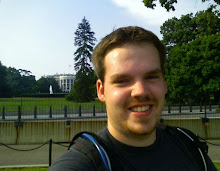
I am working as an intern with the Christian Chronicle. Here are links to the stories I have worked on so far.
Monday, November 5, 2007


Thursday, July 19, 2007
Dutch woman cycling around the world passes through North Texas
Djoeke Bareuds, a native of the Netherlands, is passing through North Texas, but what makes her journey special is that she is making this trip primarily on a 15-year-old bicycle.
Bareuds began her journey when a close friend, Christa Polder sent her a text message, in January 2006, suggesting that they quit their jobs, hop on their bikes and see the world. They quickly made a plan and began their journey in July 2006.
Bareuds decided that she would sell her house in addition to quitting her job before she left for the trip. “I wanted to experience that freedom,” said Bareuds. She gave away most of her possession as well, keeping only the things with sentimental value.
The women would take 10,000 euros each, about $13,800, and travel on it as far as it would take them. They began their journey by traveling north to Denmark and then on to Sweden and Finland, which was one of their favorite places to travel because of Sweden’s laws on camping.
Sweden has enacted several laws that give travelers access to uncultivated land. The law allows travelers to pass through the land as well as camp on it without having to get permission from the owner. The only restriction on these laws is that the campers must be “out of the way” and “leave no trace.” Bareuds and Polder were able to take full advantage of these laws, even sleeping on a golf course one night.
“We couldn’t find anywhere else, all the land around was really rock,” said Bareuds. They spent the night on the course, next to the tee with the intention of waking up early in the morning and leaving the course before anyone else arrived. However, it was raining the next morning, so they had to stay in their tent. The rain continued throughout the morning.
As they rested in their tent, they could hear golfers outside the tent as well as course workers.
The rain stopped at 3 p.m. and Bareuds peeked out of the tent when she believed no one was around. She was surprised to find that there was a man outside the tent working on the course. The man greeted her with a smile saying, “Good morning. Did you sleep well?”
The women then went on to Latvia and Russia where they traveled on the Trans-Siberian Railway, a 6,000 mile train route China from Moscow that takes an average of seven days. They took the railway to Beijing where they returned to their bikes.
When Bareuds and Polder arrived in China, they found a country that was much different from anything they had expected. They were able to see first hand what life in a communist country is like.
The land was polluted and dirty. The severe pollution forced the women to ride with bandanas over their noses and mouths. “We didn’t talk to each other for days, because we didn’t want to open our mouths. We didn’t even want to breathe,” said Bareuds.
Bareuds described the roads as the “industrial revolution.” Factories lined the road on both sides for miles. The people lived in small villages that were a part of the factories, which they worked in. China was Bareuds’ least favorite place, not because there were not beautiful places to see or because the culture was distasteful, but because of the pollution and poor living conditions the people suffered.
Despite these poor conditions, Bareuds said that the people were very kind and even quite positive. The people were also very curious about the women.
Whenever they stopped, they would quickly draw a crowd. The people would touch the women and go as far as to open their bags and look through them. This was not an attempt to steal anything, but rather something, that was culturally normal and done due to curiosity, Bareuds said.
After over a month of cycling through China, the women crossed the boarder into Vietnam where they were able to see an instant change in the countryside. After traveling through Vietnam, the women traveled to Cambodia and Thailand.
In Cambodia, the women faced the danger of landmines when they stepped off the road. Bareuds said it was very common to see people missing limbs. When they were here, they never got off the road unless it was on a path that they knew locals traveled often.
In Thailand they made their way to a national park where there were to be wild elephants roaming the area. They spent a week in the park each day trying to catch a glimpse of the animals and each day they were unsuccessful. They would ask the other visitors at the campsite if they had been able to see the elephants and each day they would get the same casual affirming answer.
After the week was up Bareuds and Polder decided that, it was time to continue. On their way out of the park, they were lucky enough to see an elephant next to the road. They stopped to take a picture of the elephant when it began flapping its ears in anger.
The women looked ahead for a way to escape, but saw that ahead of them was the herd of elephants crossing the road with their calves. They had no escape route, however as the herd finished crossing the road they jumped on the bicycles and began racing down the road with the elephant chasing them.
When they passed the herd they stopped to catch their breath and breathe a sigh of relief, but this turned out to be premature relief. The elephant was still chasing them. They again raced away on their bikes this time not stopping until they were sure they were safely away. “When we stopped, we just fell on the ground laughing, almost hysterically,” Bareuds said.
In April 2007, Bareuds and Polder reached Bangkok, Thailand where they parted ways. Polder decided that she was ready to go home while Bareuds went on to San Diego.
Bareuds then traveled to North Texas through a combination of cycling and trains. Bareuds plans to take a train to South Texas where she will follow the TransAmerican Bicycle Trail to Charleston, N.C.
From there Bareuds plans to catch a freight ship that will take her across the Atlantic Ocean to England. This is the only part of the entire journey that Bareuds planned because she had to purchase the ticket early.
Bareuds said she would bike around England for a while before returning home to the Netherlands. She was not sure what she would do once she made it home, but she plans to figure that out when she get there.
Bareuds began her journey when a close friend, Christa Polder sent her a text message, in January 2006, suggesting that they quit their jobs, hop on their bikes and see the world. They quickly made a plan and began their journey in July 2006.
Bareuds decided that she would sell her house in addition to quitting her job before she left for the trip. “I wanted to experience that freedom,” said Bareuds. She gave away most of her possession as well, keeping only the things with sentimental value.
The women would take 10,000 euros each, about $13,800, and travel on it as far as it would take them. They began their journey by traveling north to Denmark and then on to Sweden and Finland, which was one of their favorite places to travel because of Sweden’s laws on camping.
Sweden has enacted several laws that give travelers access to uncultivated land. The law allows travelers to pass through the land as well as camp on it without having to get permission from the owner. The only restriction on these laws is that the campers must be “out of the way” and “leave no trace.” Bareuds and Polder were able to take full advantage of these laws, even sleeping on a golf course one night.
“We couldn’t find anywhere else, all the land around was really rock,” said Bareuds. They spent the night on the course, next to the tee with the intention of waking up early in the morning and leaving the course before anyone else arrived. However, it was raining the next morning, so they had to stay in their tent. The rain continued throughout the morning.
As they rested in their tent, they could hear golfers outside the tent as well as course workers.
The rain stopped at 3 p.m. and Bareuds peeked out of the tent when she believed no one was around. She was surprised to find that there was a man outside the tent working on the course. The man greeted her with a smile saying, “Good morning. Did you sleep well?”
The women then went on to Latvia and Russia where they traveled on the Trans-Siberian Railway, a 6,000 mile train route China from Moscow that takes an average of seven days. They took the railway to Beijing where they returned to their bikes.
When Bareuds and Polder arrived in China, they found a country that was much different from anything they had expected. They were able to see first hand what life in a communist country is like.
The land was polluted and dirty. The severe pollution forced the women to ride with bandanas over their noses and mouths. “We didn’t talk to each other for days, because we didn’t want to open our mouths. We didn’t even want to breathe,” said Bareuds.
Bareuds described the roads as the “industrial revolution.” Factories lined the road on both sides for miles. The people lived in small villages that were a part of the factories, which they worked in. China was Bareuds’ least favorite place, not because there were not beautiful places to see or because the culture was distasteful, but because of the pollution and poor living conditions the people suffered.
Despite these poor conditions, Bareuds said that the people were very kind and even quite positive. The people were also very curious about the women.
Whenever they stopped, they would quickly draw a crowd. The people would touch the women and go as far as to open their bags and look through them. This was not an attempt to steal anything, but rather something, that was culturally normal and done due to curiosity, Bareuds said.
After over a month of cycling through China, the women crossed the boarder into Vietnam where they were able to see an instant change in the countryside. After traveling through Vietnam, the women traveled to Cambodia and Thailand.
In Cambodia, the women faced the danger of landmines when they stepped off the road. Bareuds said it was very common to see people missing limbs. When they were here, they never got off the road unless it was on a path that they knew locals traveled often.
In Thailand they made their way to a national park where there were to be wild elephants roaming the area. They spent a week in the park each day trying to catch a glimpse of the animals and each day they were unsuccessful. They would ask the other visitors at the campsite if they had been able to see the elephants and each day they would get the same casual affirming answer.
After the week was up Bareuds and Polder decided that, it was time to continue. On their way out of the park, they were lucky enough to see an elephant next to the road. They stopped to take a picture of the elephant when it began flapping its ears in anger.
The women looked ahead for a way to escape, but saw that ahead of them was the herd of elephants crossing the road with their calves. They had no escape route, however as the herd finished crossing the road they jumped on the bicycles and began racing down the road with the elephant chasing them.
When they passed the herd they stopped to catch their breath and breathe a sigh of relief, but this turned out to be premature relief. The elephant was still chasing them. They again raced away on their bikes this time not stopping until they were sure they were safely away. “When we stopped, we just fell on the ground laughing, almost hysterically,” Bareuds said.
In April 2007, Bareuds and Polder reached Bangkok, Thailand where they parted ways. Polder decided that she was ready to go home while Bareuds went on to San Diego.
Bareuds then traveled to North Texas through a combination of cycling and trains. Bareuds plans to take a train to South Texas where she will follow the TransAmerican Bicycle Trail to Charleston, N.C.
From there Bareuds plans to catch a freight ship that will take her across the Atlantic Ocean to England. This is the only part of the entire journey that Bareuds planned because she had to purchase the ticket early.
Bareuds said she would bike around England for a while before returning home to the Netherlands. She was not sure what she would do once she made it home, but she plans to figure that out when she get there.
Whitesboro School Board discusses budget
The Whitesboro ISD Board of Trustees met Monday night for its regular meeting.
After the opening items and a minor correction to the previous meetings’ minutes, the board began by deciding on when they would attend the Legislative Update Training.
The training is a mandatory training for all statewide board members. It is conducted after every legislative session to inform board members of new laws so that they can stay in compliance with the restrictions.
The board then accepted a bid to sell one of the old school buses.
Finally, the focus of the meeting was the budget workshop. Danny Sluder, Whitesboro ISD business manager, presented the preliminary budget to the board. The budget will work to pay off old debt with tighter operating costs. This year’s budget will also include a “3 percent increase for all employees who would not receive increases otherwise,” Sluder said.
All the administrators were able to give their opinions on the budget. “The four principals got to sit down and say, ‘I don’t like that cut. I’d rather it be here,’” Sluder said. The athletic director was also given an opportunity to participate.
The board then discussed various ideas to increase revenue, which include increases lunch prices by 25 cents at the elementary, which would result in an estimated $22,000 increase in annual revenue. The board is also discussing a tax election to increase revenue.
The board will hold a special meeting on July 31, where they will have a public hearing to discuss the budget, food price increase and the possible tax election. Citizens will be given the opportunity to give their opinions on the issues. The board is encouraging everyone to attend this special meeting.
After the opening items and a minor correction to the previous meetings’ minutes, the board began by deciding on when they would attend the Legislative Update Training.
The training is a mandatory training for all statewide board members. It is conducted after every legislative session to inform board members of new laws so that they can stay in compliance with the restrictions.
The board then accepted a bid to sell one of the old school buses.
Finally, the focus of the meeting was the budget workshop. Danny Sluder, Whitesboro ISD business manager, presented the preliminary budget to the board. The budget will work to pay off old debt with tighter operating costs. This year’s budget will also include a “3 percent increase for all employees who would not receive increases otherwise,” Sluder said.
All the administrators were able to give their opinions on the budget. “The four principals got to sit down and say, ‘I don’t like that cut. I’d rather it be here,’” Sluder said. The athletic director was also given an opportunity to participate.
The board then discussed various ideas to increase revenue, which include increases lunch prices by 25 cents at the elementary, which would result in an estimated $22,000 increase in annual revenue. The board is also discussing a tax election to increase revenue.
The board will hold a special meeting on July 31, where they will have a public hearing to discuss the budget, food price increase and the possible tax election. Citizens will be given the opportunity to give their opinions on the issues. The board is encouraging everyone to attend this special meeting.
City Council meets Tuesday night
The Whitesboro City Council met Tuesday night to discuss a number of issues. All members were present except Alderman Mike Pack.
The Council began by hearing from department heads. Library director, Ginger Garvin said their summer program is coming to a close this week and they expect between 40 and 45 attendees at the slumber party Friday night.
Penny Renfroe, director of parks and recreation, said she was searching for a new administrative assistance. Scott Taylor, Whitesboro Police Chief also said that one of his officiers, Ryan Canady, had resigned.
The Council then heard recommendations from Janis Crawley, director of economic development for an appointment to fill an unexpired term on the economic development board. The Council appointed Amy Goedecke to fill the position.
The Council then voted unanimously to pass a 3.5 percent rate increase for solid waste disposal onto the citizens. The increase has already been passed by IESI and this decision only passes the increase onto the customers.
The Council passed an agreement with the Texas Department of Transportation that would grant permission to close Highway 56 for the Peanut Festival. This agreement is for five years instead of the usual one year.
Finally, the Council voted to suspend the Atmos GRIP rate request. This is a request by Atmos energy to increase its rates. The council’s suspension of the request will give the council time to review the request and allow customers to enjoy another three months before a rate increase.
The Council began by hearing from department heads. Library director, Ginger Garvin said their summer program is coming to a close this week and they expect between 40 and 45 attendees at the slumber party Friday night.
Penny Renfroe, director of parks and recreation, said she was searching for a new administrative assistance. Scott Taylor, Whitesboro Police Chief also said that one of his officiers, Ryan Canady, had resigned.
The Council then heard recommendations from Janis Crawley, director of economic development for an appointment to fill an unexpired term on the economic development board. The Council appointed Amy Goedecke to fill the position.
The Council then voted unanimously to pass a 3.5 percent rate increase for solid waste disposal onto the citizens. The increase has already been passed by IESI and this decision only passes the increase onto the customers.
The Council passed an agreement with the Texas Department of Transportation that would grant permission to close Highway 56 for the Peanut Festival. This agreement is for five years instead of the usual one year.
Finally, the Council voted to suspend the Atmos GRIP rate request. This is a request by Atmos energy to increase its rates. The council’s suspension of the request will give the council time to review the request and allow customers to enjoy another three months before a rate increase.
Firefighters busy with accidents
Local emergency workers were busy Friday with accidents in Sherwood Shores and Whitesboro.
At 4:40 p.m. Gordonville and Sherwood Shores fire departments were dispatched to the intersection of Highway 377 and F.M. 901. A red Ford Explorer had run off the road and rolled in the ditch.
As fire fighters responded to the accident, Ron Blackwell, Sherwood Shores Fire Chief reported that there was an accident at Liberty Road and Highway 377, which is two mile north of F.M. 901. Dispatch determined that this was the exact location of the reported accident. First responders were quickly re-routed.
The occupants of the vehicle were treated on-scene. They sustained no transportable injuries.
No cause has been officially determined at this time. However, on-scene rescuers said that it appeared to be a distracted driver. “The [driver] was eating a chocolate sundae. That appears to be a contributing factor,” said Blackwell.
Only a few hours later, at 7:23 p.m. Whitesboro Firefighters were dispatched a very short distance from their station to the intersection of Main Street and Union Street to respond to a two vehicle accident.
Gainesville resident, Michael Vaughn, was driving a black Dodge Ram 1500 north on Union Street through the intersection when Andrew Gargiulo in Green Chevrolet Metro struck him. Gargiulo was as in the opposite lane and turning left onto Main Street. The vehicles collided and then Vaughn was deflected into the brick wall on the northeast corner of the intersection.
Police determined Gargiulo to be at fault for “proceed[ing] to turn left without yielding the right of way,” according to the accident report. However, witness, Ben Munson said that Vaughn was traveling at an excessive speed.
No one was injured in the accident but it did cause significant damage to both vehicles as well as the brick retaining wall. It also forced officials to temporarily close both lanes of the downtown section of Main Street. This interrupted the flow of traffic from Whitesboro’s first Cruse Night, although no one involved in the accident was actually participating in the cruse at the time.
At 4:40 p.m. Gordonville and Sherwood Shores fire departments were dispatched to the intersection of Highway 377 and F.M. 901. A red Ford Explorer had run off the road and rolled in the ditch.
As fire fighters responded to the accident, Ron Blackwell, Sherwood Shores Fire Chief reported that there was an accident at Liberty Road and Highway 377, which is two mile north of F.M. 901. Dispatch determined that this was the exact location of the reported accident. First responders were quickly re-routed.
The occupants of the vehicle were treated on-scene. They sustained no transportable injuries.
No cause has been officially determined at this time. However, on-scene rescuers said that it appeared to be a distracted driver. “The [driver] was eating a chocolate sundae. That appears to be a contributing factor,” said Blackwell.
Only a few hours later, at 7:23 p.m. Whitesboro Firefighters were dispatched a very short distance from their station to the intersection of Main Street and Union Street to respond to a two vehicle accident.
Gainesville resident, Michael Vaughn, was driving a black Dodge Ram 1500 north on Union Street through the intersection when Andrew Gargiulo in Green Chevrolet Metro struck him. Gargiulo was as in the opposite lane and turning left onto Main Street. The vehicles collided and then Vaughn was deflected into the brick wall on the northeast corner of the intersection.
Police determined Gargiulo to be at fault for “proceed[ing] to turn left without yielding the right of way,” according to the accident report. However, witness, Ben Munson said that Vaughn was traveling at an excessive speed.
No one was injured in the accident but it did cause significant damage to both vehicles as well as the brick retaining wall. It also forced officials to temporarily close both lanes of the downtown section of Main Street. This interrupted the flow of traffic from Whitesboro’s first Cruse Night, although no one involved in the accident was actually participating in the cruse at the time.
Great Race and Cruise Night deemed success
The Cruise Night gave businesses the chance to gain exposure and participants the chance to show off their cars and win door prizes. “I think that is a good way to promote downtown or any of our businesses,” Anderson said.
The Chamber was also able to make a small, unexpected, profit from its food stand at Trollinger Park. “We didn't know that we would make any money off of it,” said Anderson. The independent booths said that they were able to make some profit as well.
Cruiser represented a wide range of cars, from a Dodge Durango, to classic cars of all types.
The cruise lasted from 7 to 10 p.m. The route took cars to Sonic, where they had a free meal voucher, and through downtown to visit various local businesses.
Cruisers were slowed by an accident at Main Street and Union Street, which temporarily closed the downtown section of Main Street. However, the vehicles involved in the accident were not cruise participants. “It slowed down the cruise a little bit but I don't think it affected us very much,” said Anderson.
The Chamber plans to make the Cruise Night an annual event and have already begun planning. “The next event, what I would say is, more door prizes and more stops,” said Blaylock. Even Great Race participants were enthusiastic about the car display and Cruise Night and encouraged organizers to continue it. The Chamber has already received requests from interested businesses.
At the end of stage 7 driver Louis and navigator Jim Feeney were in the lead with their 1936 Ford Fordor Deluxe, according the Great Race website (www.greatrace.com). However, the race is still very close. The Grand Champion will be decided on Saturday, July 14, in Anaheim, Calif. Daily results can be found the Great Race website.
The Chamber was also able to make a small, unexpected, profit from its food stand at Trollinger Park. “We didn't know that we would make any money off of it,” said Anderson. The independent booths said that they were able to make some profit as well.
Cruiser represented a wide range of cars, from a Dodge Durango, to classic cars of all types.
The cruise lasted from 7 to 10 p.m. The route took cars to Sonic, where they had a free meal voucher, and through downtown to visit various local businesses.
Cruisers were slowed by an accident at Main Street and Union Street, which temporarily closed the downtown section of Main Street. However, the vehicles involved in the accident were not cruise participants. “It slowed down the cruise a little bit but I don't think it affected us very much,” said Anderson.
The Chamber plans to make the Cruise Night an annual event and have already begun planning. “The next event, what I would say is, more door prizes and more stops,” said Blaylock. Even Great Race participants were enthusiastic about the car display and Cruise Night and encouraged organizers to continue it. The Chamber has already received requests from interested businesses.
At the end of stage 7 driver Louis and navigator Jim Feeney were in the lead with their 1936 Ford Fordor Deluxe, according the Great Race website (www.greatrace.com). However, the race is still very close. The Grand Champion will be decided on Saturday, July 14, in Anaheim, Calif. Daily results can be found the Great Race website.
Council makes preliminary budget decisions
The Whitesboro City Council has begun work on its annual budget. Among the items being discussed are the acquisition of land for the expansion of the cemetery and the extension of 4th Street to Highway 377.
Counsel members met Tuesday, June 26 for a special workshop meeting to discuss the items.
“We were just trying to rank our projects so the city administrator would know where to concentrate the budget. The immediate thing that came up is that we have a limited number of spaces in the current cemetery,” said W.D. Welch, Whitesboro Mayor.
Because the land would have to be developed, it would require a significant budgetary commitment. The land would require money to be surveyed and for roads and fences to be built, in addition to money for the actual purchase of the property.
The council decided to begin the acquisition process this year and begin developing it in sections later. “We will probably try to acquire some of the cemetery property this year and in some of the budget next year we will try to start developing,” Welch said.
The extension of 4th Street has also been discussed in detail. Welch said the city has already acquired the needed right of ways from property owners to begin the project, but will first have to relocate several facilities before beginning the construction.
“We are going to have to relocate two ball fields that are used extensively during the parks and recreation's season and the city yard,” Welch said. This project will require a lot of time and planning. Welch expected the city to begin relocating the facilities this year and begin the developing in stages next year.
“When we start talking about doing these big projects we have to have an anticipation of, where are going to put people. What are we going to do with the city yard? What are we going to do with the ball fields?” Welch said.
The council has also begun planning for special departmental needs such as new vehicles and machinery. “We came in there with a list of the thing that all the different department heads think that we need,” Welch said.
“What we were attempting to do is to do a little brainstorming and get our priorities in line so when the city administrator starts to put together a budget he can anticipate what we're looking at,” Welch said.
Counsel members will have some preliminary figures for the budget this week and they will hold special budgetary meetings on July 24 and 26 to finalize the budget, said Michael Marter, Whitesboro City Administrator.
Counsel members met Tuesday, June 26 for a special workshop meeting to discuss the items.
“We were just trying to rank our projects so the city administrator would know where to concentrate the budget. The immediate thing that came up is that we have a limited number of spaces in the current cemetery,” said W.D. Welch, Whitesboro Mayor.
Because the land would have to be developed, it would require a significant budgetary commitment. The land would require money to be surveyed and for roads and fences to be built, in addition to money for the actual purchase of the property.
The council decided to begin the acquisition process this year and begin developing it in sections later. “We will probably try to acquire some of the cemetery property this year and in some of the budget next year we will try to start developing,” Welch said.
The extension of 4th Street has also been discussed in detail. Welch said the city has already acquired the needed right of ways from property owners to begin the project, but will first have to relocate several facilities before beginning the construction.
“We are going to have to relocate two ball fields that are used extensively during the parks and recreation's season and the city yard,” Welch said. This project will require a lot of time and planning. Welch expected the city to begin relocating the facilities this year and begin the developing in stages next year.
“When we start talking about doing these big projects we have to have an anticipation of, where are going to put people. What are we going to do with the city yard? What are we going to do with the ball fields?” Welch said.
The council has also begun planning for special departmental needs such as new vehicles and machinery. “We came in there with a list of the thing that all the different department heads think that we need,” Welch said.
“What we were attempting to do is to do a little brainstorming and get our priorities in line so when the city administrator starts to put together a budget he can anticipate what we're looking at,” Welch said.
Counsel members will have some preliminary figures for the budget this week and they will hold special budgetary meetings on July 24 and 26 to finalize the budget, said Michael Marter, Whitesboro City Administrator.
Subscribe to:
Comments (Atom)